
| David & Christine Bergin 16696 273rd Street Fort Ripley MN 56449 218.330.1531 info@roundrockfarm.com |



 | |  | |  | |  | |  |
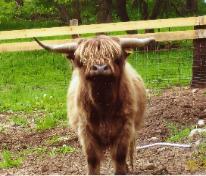
Highland cattle have developed for centuries in the rugged hills of
Scotland's Highlands. Originally there were two types. Kyloes, were
small and black in colour, and were associated with the West of Scotland
and the Islands, while the larger red haired cattle grazed the Highlands.
Today they are known collectively as Highland Cattle. Only the fittest and
most adaptable animals survived to carry on the breed. Hardy and
beautiful, they symbolize the area from which they came. Due to the
harsh conditions, these cattle developed two coats of hair minimizing back
fat content. Their meat is still beautifully marbled and delicious, but by
utilizing hair instead of fat to insulate, the saturated fat and cholesterol
counts in Highland meat is the lowest of any other beef cattle. Tests done
by the Scottish Agricultural College have proven that Highland Beef is
significantly lower in fat and cholesterol, and higher in protein and iron
than other beef.*
Highlands are one of the oldest registered breeds of cattle, with the first
herd book established in 1884. Western U.S. Cattlemen recognized the
natural qualities of the Highland animal and imported them to improve
the bloodlines of their herds. Today, Highlands can be found throughout
North America, Europe, Australia and South America.
Highlands require little in the way of shelter, feed supplements or
expensive grains to achieve and maintain good condition and fitness.
Cold weather and snow seem to have little effect on them. In fact,
Highlands seem to enjoy conditions in which other breeds would perish
and have been raised as far north as Alaska and the Scandinavian
countries. They are an excellent browser and can adapt and prosper in
southerly climates as well, foraging on less than ideal pasture or
rangeland. It has been said that the Highland will eat what other cattle
pass by - and get fat on it!
The Highland is a disease resistant breed, rarely needing antibiotics.
They've achieved genetic advantages causing them to be less affected by
bovine diseases. Long lashes and forelocks shield their eyes from flying
insects and pigmentation around their eyes contribute to low rates of
pinkeye and cancer eye.
Despite their long horns and unusual appearance, Highland males and
females are considered docile and even tempered with superior
intelligence. They have proven easy to halter train and show. Their
characteristics include high fertility rates and easy calving with breeders
reporting 90 to 99% calf-crop percentages. Optimum milk production and
strong maternal instincts make the Highland female an outstanding brood
cow. Few breeds can match the average retirement age of Highlands
with bulls commonly servicing through the age of 12 and cows calving
beyond the age of 15.
Highland bulls typically weigh 1650 to 1850 lbs at maturity while the
typical female weighs 1100 to 1200 lbs. Highlands average in birth
weight from 60 to 65 lbs. and the recognized colours are red, black,
yellow, dun, white, brindle and silver.
For more information on Scottish Highlanders visit:
American Highland Cattle Association
North Central Highland Cattle Association
Scotland's Highlands. Originally there were two types. Kyloes, were
small and black in colour, and were associated with the West of Scotland
and the Islands, while the larger red haired cattle grazed the Highlands.
Today they are known collectively as Highland Cattle. Only the fittest and
most adaptable animals survived to carry on the breed. Hardy and
beautiful, they symbolize the area from which they came. Due to the
harsh conditions, these cattle developed two coats of hair minimizing back
fat content. Their meat is still beautifully marbled and delicious, but by
utilizing hair instead of fat to insulate, the saturated fat and cholesterol
counts in Highland meat is the lowest of any other beef cattle. Tests done
by the Scottish Agricultural College have proven that Highland Beef is
significantly lower in fat and cholesterol, and higher in protein and iron
than other beef.*
Highlands are one of the oldest registered breeds of cattle, with the first
herd book established in 1884. Western U.S. Cattlemen recognized the
natural qualities of the Highland animal and imported them to improve
the bloodlines of their herds. Today, Highlands can be found throughout
North America, Europe, Australia and South America.
Highlands require little in the way of shelter, feed supplements or
expensive grains to achieve and maintain good condition and fitness.
Cold weather and snow seem to have little effect on them. In fact,
Highlands seem to enjoy conditions in which other breeds would perish
and have been raised as far north as Alaska and the Scandinavian
countries. They are an excellent browser and can adapt and prosper in
southerly climates as well, foraging on less than ideal pasture or
rangeland. It has been said that the Highland will eat what other cattle
pass by - and get fat on it!
The Highland is a disease resistant breed, rarely needing antibiotics.
They've achieved genetic advantages causing them to be less affected by
bovine diseases. Long lashes and forelocks shield their eyes from flying
insects and pigmentation around their eyes contribute to low rates of
pinkeye and cancer eye.
Despite their long horns and unusual appearance, Highland males and
females are considered docile and even tempered with superior
intelligence. They have proven easy to halter train and show. Their
characteristics include high fertility rates and easy calving with breeders
reporting 90 to 99% calf-crop percentages. Optimum milk production and
strong maternal instincts make the Highland female an outstanding brood
cow. Few breeds can match the average retirement age of Highlands
with bulls commonly servicing through the age of 12 and cows calving
beyond the age of 15.
Highland bulls typically weigh 1650 to 1850 lbs at maturity while the
typical female weighs 1100 to 1200 lbs. Highlands average in birth
weight from 60 to 65 lbs. and the recognized colours are red, black,
yellow, dun, white, brindle and silver.
For more information on Scottish Highlanders visit:
American Highland Cattle Association
North Central Highland Cattle Association
About Highlands
 | |  | |  | |  | |  |
| Contact Us 218.330.1531 or info@roundrockfarm.com |
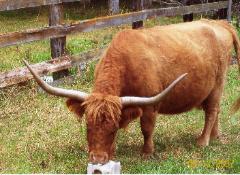
The long almost
comical fringe of hair
over the Highlands
forehead is called a
Dossan.
The Queen of England
has a Highland fold at
Balmoral Castle to
supply the royal
household with fresh
beef.
comical fringe of hair
over the Highlands
forehead is called a
Dossan.
The Queen of England
has a Highland fold at
Balmoral Castle to
supply the royal
household with fresh
beef.

Did you know...
"Taste the difference"
* http://www.electricscotland.com/nature/highland_cattle.htm